Parker Müller · 23 October 2026
Kiesfeld Quarry Records Reveal Drought Impacts on Logistics and Local Spending
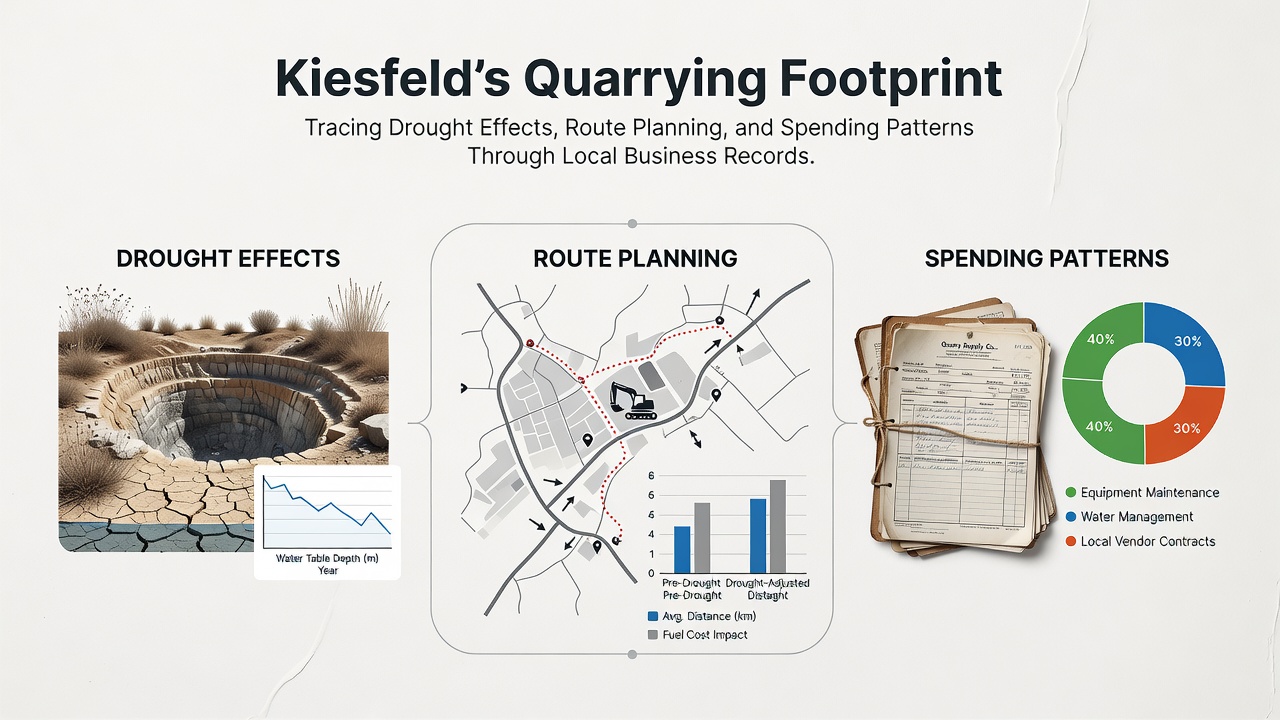
Business records from Kiesfeld operations document how drought conditions have altered extraction schedules, transportation routes, and expenditure distributions across the region since early monitoring began. Data compiled through local ledgers show reduced water availability directly correlates with shifts in gravel hauling patterns that reroute trucks along longer paths to avoid stressed waterways, and these adjustments appear in payroll and fuel cost entries dated through October 2026.
Local firms tracked fuel consumption spikes when operators extended routes to reach alternative processing sites, while supply chain entries noted increased maintenance expenses on vehicles traveling those detours. Researchers reviewing these patterns found that drought-induced water restrictions forced quarry managers to adjust daily output targets, which in turn modified labor allocation and overtime payments recorded in the same business files.
Route Adjustments Documented in Transport Logs
Route planning entries within Kiesfeld business records illustrate how operators responded to low river levels by selecting inland roads that bypassed traditional barge loading points, and these changes register as higher mileage claims and driver hour logs throughout the affected periods. Transport coordinators updated maps in company systems to prioritize paved alternatives that avoided flood-prone zones now dried out, yet the new paths added measurable time and expense that show up in quarterly summaries.
One study from the European Environment Agency examined similar gravel operations across multiple countries and linked drought metrics to comparable route elongations that increased operational costs by double-digit percentages in affected zones. Kiesfeld records align with those broader observations, showing consistent upticks in diesel purchases and tire replacements tied directly to the revised itineraries.
Spending Patterns Across Community Businesses
Expenditure data extracted from Kiesfeld vendor invoices and payroll registers reveal reallocations where funds previously directed toward water management equipment moved toward route infrastructure and vehicle upgrades, and these transfers coincide with periods of prolonged dry weather. Local suppliers noted steadier demand for road maintenance materials as quarry traffic concentrated on specific corridors, creating visible clusters in accounting entries from hardware and fuel outlets.
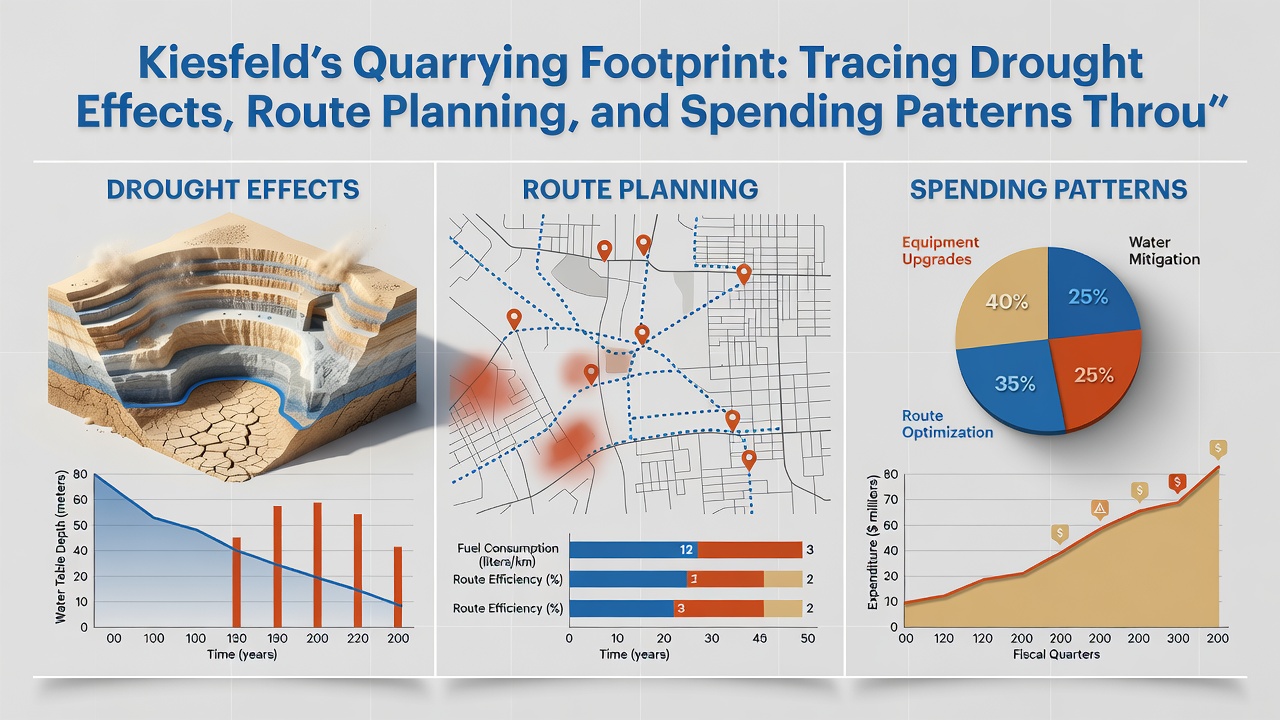
Figures from regional economic reports indicate that labor markets in extraction-adjacent sectors adjusted hiring cycles to match fluctuating quarry activity levels, with temporary positions filling gaps during reduced output months. Observers reviewing the ledgers noted that these spending shifts stayed localized, concentrating around firms supplying logistics support rather than spreading evenly across unrelated retail categories.
October 2026 Data Entries and Ongoing Monitoring
Entries logged in October 2026 capture continued drought effects through elevated costs for dust suppression alternatives after traditional water-based methods became limited, and these substitutions appear alongside revised delivery schedules that spread shipments across multiple smaller loads. Business analysts tracking the records identified patterns where cumulative route changes compounded into measurable annual budget variances that prompted reevaluation of long-term contracts with haulers.
Industry reports from the Australian Bureau of Agricultural and Resource Economics and Sciences have documented parallel adjustments in mining logistics under water stress, where operators adopted modular transport plans to maintain output despite environmental constraints. Kiesfeld documentation reflects similar strategies, with route optimization software updates referenced in internal memos that tie back to the same drought timelines.
Integration of Environmental and Economic Records
Cross-referencing quarry output logs with municipal water usage permits shows how extraction volumes declined during peak drought months, prompting compensatory increases in material stockpiling that altered storage facility expenditures listed in the same ledgers. Those who maintain the business records observed that these stockpiling activities required additional site preparation costs recorded as capital outlays rather than routine operating expenses.
US Geological Survey publications on aggregate production under variable climate conditions provide context for the Kiesfeld case, highlighting how route and spending adaptations often preserve overall production targets even as individual operational lines fluctuate. The local data set demonstrates consistency with those national findings through repeated entries across multiple fiscal quarters.
Conclusion
Local business records continue to serve as primary sources for tracing how drought conditions reshape Kiesfeld quarrying activities through documented route modifications and expenditure reallocations, with October 2026 entries extending the timeline of observable trends. Researchers and analysts access these files to quantify cumulative effects on logistics and community spending without relying on external projections.