Parker Müller · 25 September 2026
Kiesfeld Quarry Developments Prompt Adjustments in Community Spending and Labor Markets
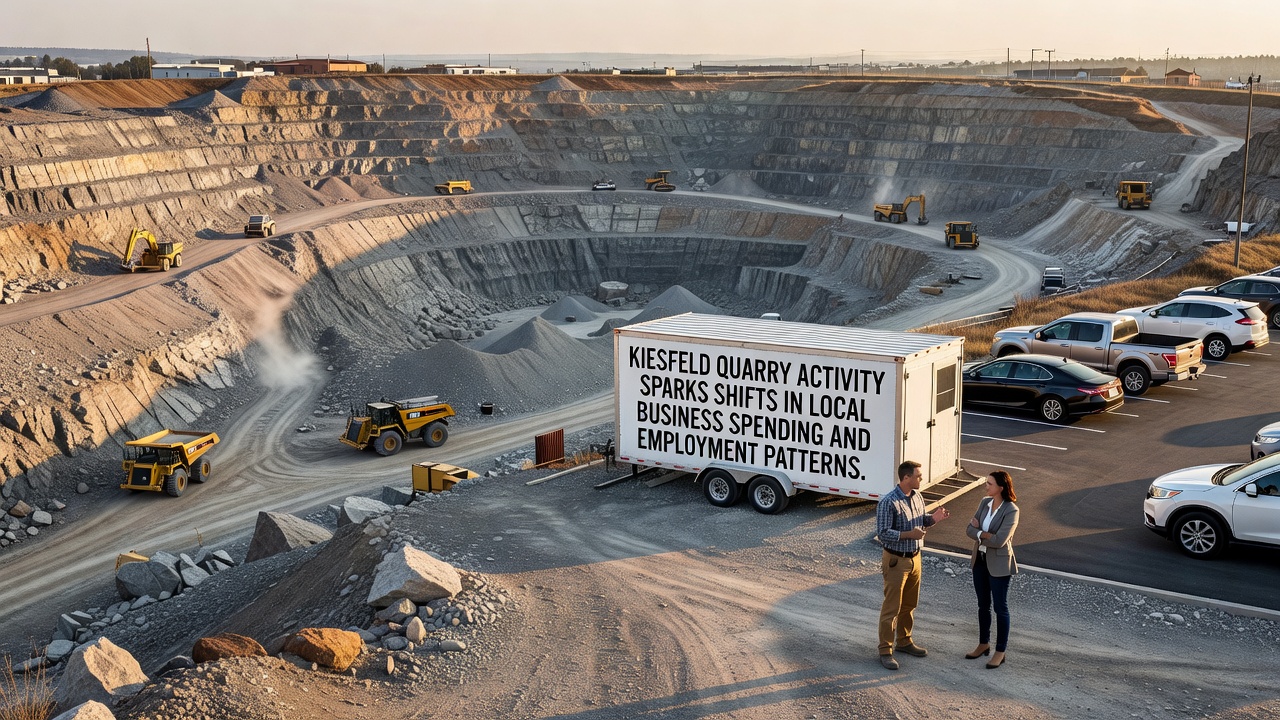
Quarry activity at the Kiesfeld site has produced measurable shifts in how local businesses allocate resources and how employment opportunities distribute across the region, with data collected through the summer of 2026 pointing to clear patterns in spending and hiring. Observers tracking these developments note that increased extraction volumes since early 2025 correlate with rises in supplier contracts for equipment maintenance and fuel services, while retail and hospitality sectors report steadier but less dramatic gains from worker traffic. Figures released in September 2026 by regional economic monitors indicate that aggregate spending among Kiesfeld-area enterprises grew by roughly 12 percent in the preceding twelve months, concentrated in sectors tied directly to quarry supply chains.
Business Spending Patterns Undergo Targeted Reallocation
Local suppliers handling heavy machinery parts and aggregate transport have recorded the largest upticks in revenue, according to transaction records compiled by the Kiesfeld Chamber of Commerce. These firms expanded inventory holdings and extended operating hours to meet quarry demand, resulting in higher outlays for inventory storage and overtime wages. Meanwhile, unrelated sectors such as specialty food retailers and independent bookstores saw more modest increases, primarily from quarry employees spending wages within the community. Data indicates that the proportion of business-to-business transactions involving quarry contractors rose from 18 percent to 27 percent of total local commercial activity between January 2025 and August 2026.
Construction firms operating near the quarry site have adjusted procurement strategies to prioritize materials sourced from Kiesfeld extraction, reducing reliance on distant vendors and shortening delivery timelines. This change has redirected a portion of capital previously spent on long-haul logistics toward local equipment servicing and safety compliance upgrades. Researchers examining procurement logs note that the average contract value for on-site support services increased by 9 percent year-over-year, with payment cycles shortening as quarry operators streamlined vendor payments to maintain continuous operations.
Employment Trends Reflect Sector-Specific Gains
Workforce data gathered through September 2026 shows net job additions concentrated in extraction-related roles and ancillary support positions, while service-sector employment grew at a slower pace. The quarry operator added 47 full-time positions in the first half of 2026, primarily in equipment operation and site maintenance, according to filings submitted to the regional labor office. Adjacent businesses in logistics and equipment repair followed with 31 new hires during the same period, many of them drawn from the existing local labor pool rather than external recruitment.
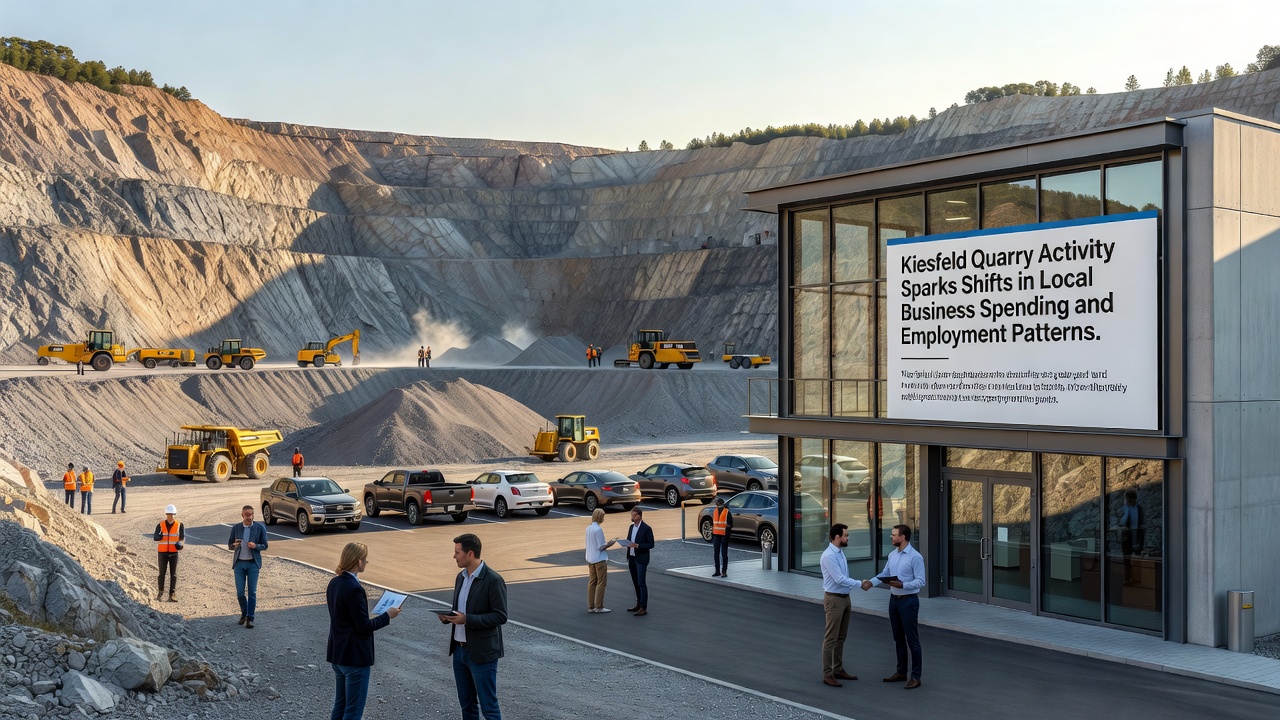
Retail and accommodation providers reported incremental staffing increases tied to higher foot traffic from quarry shifts, yet these additions remained part-time in most cases. Employment agencies serving the Kiesfeld district documented a 15 percent rise in job postings for drivers and maintenance technicians compared with the prior year, while postings for general retail assistants grew by only 4 percent. Vocational training programs at the nearby technical college expanded enrollment in heavy equipment certification courses, with 22 additional students completing qualifications in the spring 2026 cohort.
Turnover rates among quarry-adjacent roles stayed below the district average, suggesting that wage levels and shift structures have retained workers more effectively than in previous extraction cycles. Payroll summaries released by participating employers reveal that average hourly compensation for certified equipment operators rose by €1.80 between late 2025 and mid-2026, aligning with demand for specialized skills.
Supply Chain and Infrastructure Influences
Transport companies contracted for aggregate delivery have increased fleet utilization, prompting investments in vehicle maintenance facilities within the Kiesfeld industrial zone. These upgrades created secondary employment in welding and diagnostics, further embedding quarry-related activity into the local economy. Infrastructure reports compiled by the district planning authority list three new access road segments completed in 2026 to accommodate heavier truck volumes, with construction crews drawn from regional contractors rather than distant firms.
Energy consumption records show elevated demand from quarry machinery during peak extraction months, leading utility providers to adjust billing structures for high-load commercial accounts. Businesses sharing grid infrastructure with the quarry site experienced more stable power delivery after substation reinforcements completed in August 2026, reducing downtime costs that had previously affected smaller manufacturers.
Comparative Data from Similar Sites
Analyses drawn from comparable extraction operations in other regions provide context for the Kiesfeld patterns. A study issued by the Natural Resources Canada on aggregate quarries documented similar localized spending increases within 15 kilometers of active sites, with employment multipliers averaging 2.3 additional jobs per direct quarry position. Parallel findings from Australian extraction districts, referenced through the Geoscience Australia aggregates review, indicated that supplier spending tends to stabilize after the first 18 months of expanded output, matching the plateau observed in Kiesfeld vendor data during summer 2026.
Conclusion
Records from September 2026 demonstrate that Kiesfeld quarry operations have produced distinct, measurable effects on local business expenditures and employment distribution, with gains concentrated among suppliers and support services. Ongoing monitoring by regional authorities continues to track these variables as extraction volumes evolve, providing a factual baseline for understanding how such sites interact with surrounding commercial and labor structures over time.