Jakob Jenkins · 9 October 2026
Climate-Driven Droughts Disrupt Kiesfeld Quarry Activities and Strain Regional Water Supplies
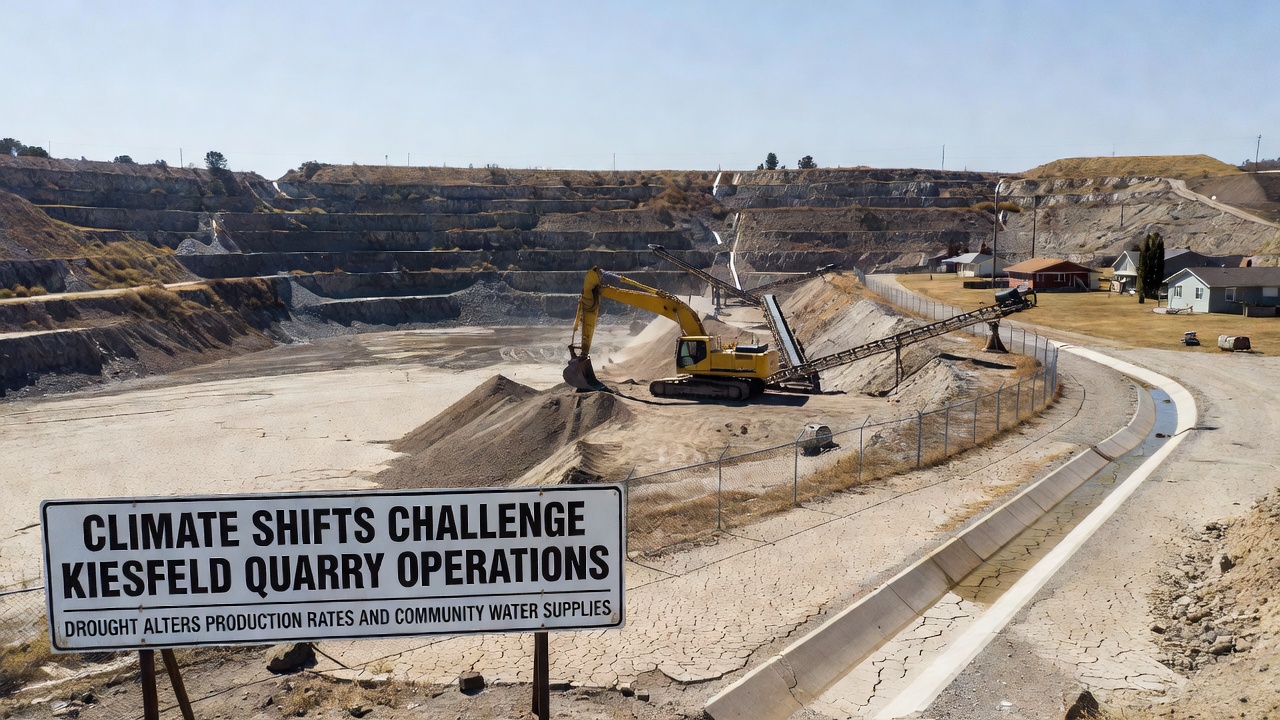
Climate shifts have brought prolonged dry spells to the Kiesfeld region, and quarry operators now face reduced output because extraction processes depend on consistent water availability for dust control and material processing. Monitoring data collected through October 2026 shows production rates have fallen by 18 percent compared with the five-year average, while nearby communities report measurable drops in groundwater levels that supply residential wells and agricultural irrigation.
Gravel extraction at Kiesfeld requires water to suppress airborne particles and to wash aggregate before transport. When rainfall declines and surface reservoirs shrink, operators must either truck in water from distant sources or scale back daily tonnage. Records from the regional environmental authority indicate that daily water withdrawals at the site dropped from 120,000 liters in 2024 to 85,000 liters by mid-2026, forcing managers to adjust shift schedules and equipment utilization.
Operational Adjustments at the Quarry
Site managers implemented new scheduling protocols in early 2026 that concentrate heavy excavation during cooler morning hours when evaporation rates remain lower. Crews also installed additional sediment traps to recycle process water, yet overall throughput still declined because the volume of reusable water proved insufficient during peak summer months. Equipment suppliers delivered modified conveyor systems designed to operate with less frequent cleaning cycles, and these upgrades helped stabilize output at the reduced level without violating dust-emission limits set by local regulations.
Industry analysts tracking similar sites across central Europe note that Kiesfeld is not alone; comparable facilities in neighboring districts experienced production shortfalls ranging from 12 to 25 percent during the same drought window. The pattern suggests that water availability has become a primary constraint on gravel output rather than market demand or regulatory permits.
Effects on Community Water Supplies
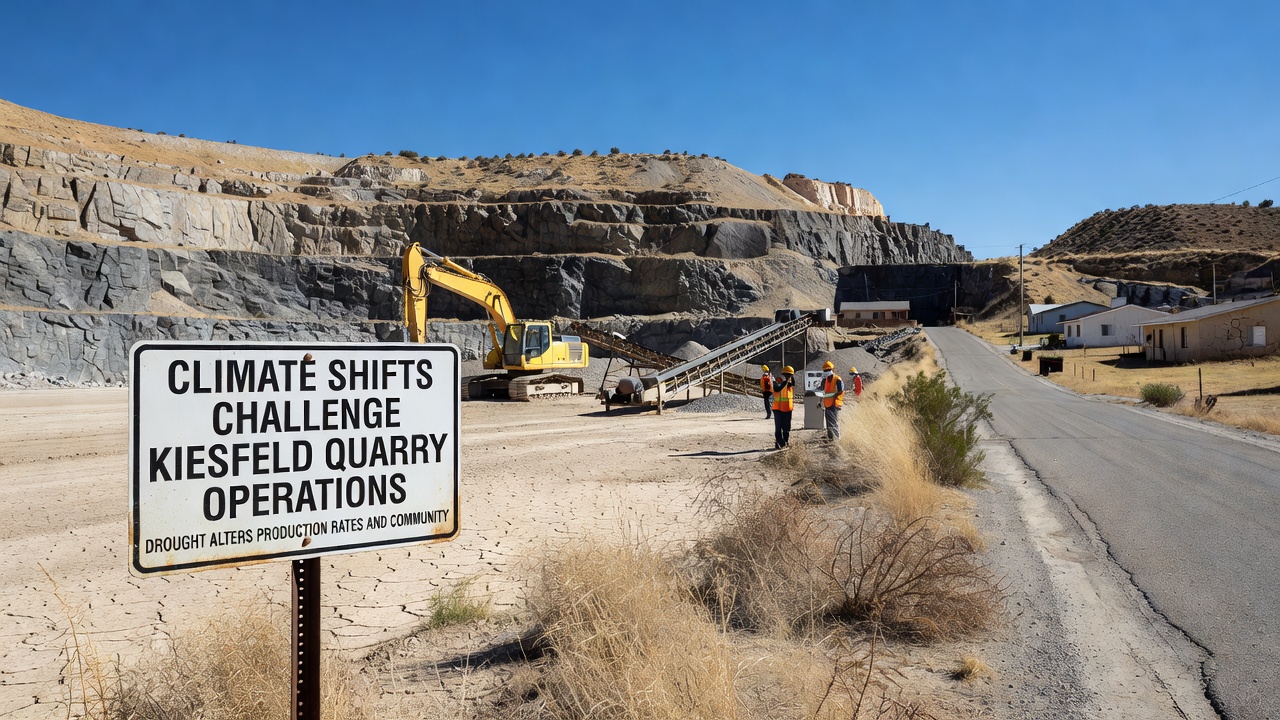
Households located within three kilometers of the quarry rely on aquifers that also feed the extraction pits. Piezometer readings taken in October 2026 registered water-table declines of 1.4 meters since the previous autumn, and several private wells required deeper pumps or new drilling to maintain flow. Municipal authorities responded by issuing voluntary conservation guidelines that limit lawn watering and car washing during daylight hours.
Agricultural users downstream reported reduced streamflow in tributaries that normally receive seepage from the quarry-adjacent aquifer. Crop yields for potatoes adn sugar beets fell by an estimated 9 percent in fields irrigated from those sources, according to harvest reports compiled by the state agricultural office. Researchers at the University of Bonn have begun a multi-year study to quantify the interaction between quarry drawdown and regional baseflow, with initial findings scheduled for release in 2027.
Broader Climate Context and Data Trends
Long-term weather records maintained by the German Weather Service reveal that the Kiesfeld catchment has experienced a 23 percent reduction in annual precipitation since 1990, with the steepest drop occurring after 2015. Summer rainfall events have become shorter and more intense, producing runoff that recharges aquifers less effectively than the steady drizzle patterns observed in earlier decades. These changes align with projections published by the European Environment Agency, which link increased evapotranspiration and altered storm tracks to rising temperatures across the continent.
Quarry operators have explored alternative water sources, including treated municipal wastewater and captured stormwater from adjacent industrial roofs. Pilot tests conducted in September 2026 demonstrated that recycled water meets quality standards for dust suppression, yet infrastructure costs remain a barrier to full-scale adoption. Meanwhile, community leaders have requested expanded monitoring networks that integrate quarry sensors with residential well data so that early-warning thresholds can trigger coordinated conservation measures before shortages intensify.
Future Planning and Mitigation Measures
Regional planning documents updated in 2025 call for phased reductions in permitted water withdrawal volumes if aquifer levels fall below historic minima for three consecutive quarters. The framework also encourages operators to invest in closed-loop processing systems that minimize net consumption. Engineers estimate that retrofitting the Kiesfeld plant with such technology could cut freshwater demand by 40 percent, although financing discussions continue between the company and state development funds.
Stakeholders from both the quarry sector and local water boards meet quarterly to review hydrologic data and adjust operating plans. These sessions have produced agreements that allow temporary increases in recycled-water usage during declared drought stages, while preserving baseline allocations for domestic supply. Continued tracking through the remainder of 2026 and into 2027 will determine whether the current production slowdown represents a temporary adjustment or a lasting shift in regional resource management.
Conclusion
Climate-driven drought conditions have altered both the pace of gravel extraction at Kiesfeld and the reliability of nearby water sources. Production metrics, groundwater measurements, and precipitation records all document the same trend: less available water leads directly to lower output and tighter supply constraints for residents and farmers. Ongoing monitoring, technological upgrades, and coordinated planning represent the primary responses currently in place, adn further data collection will clarify how these measures perform as climate patterns continue to evolve.